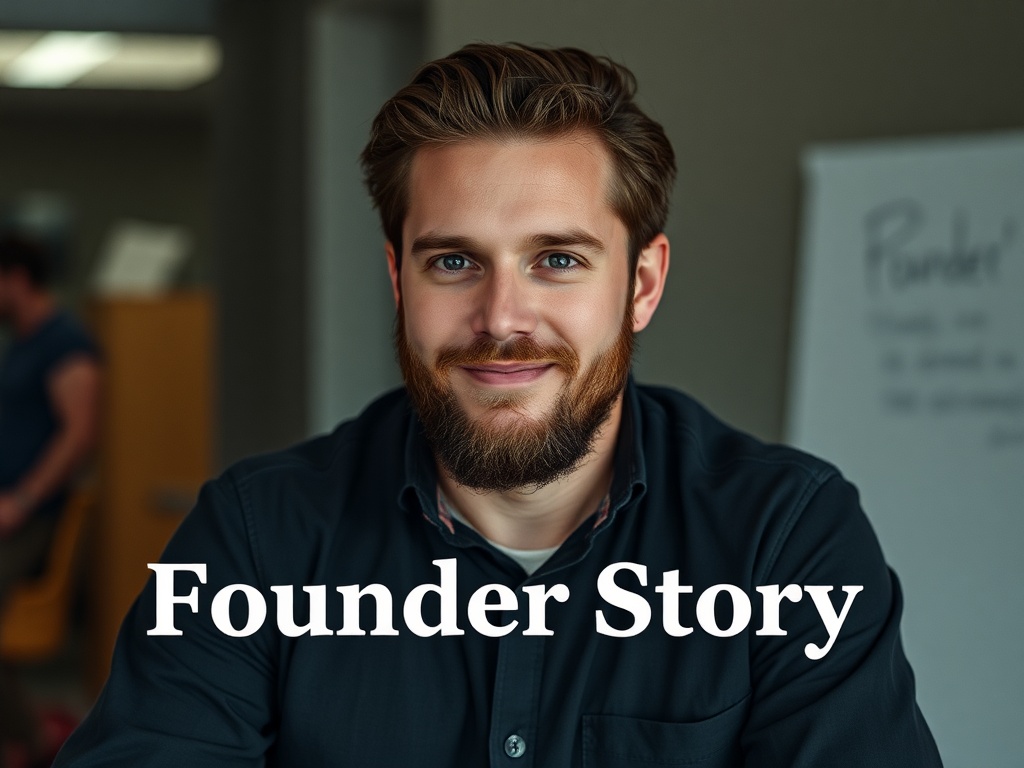
Founder Story: How to Turn Personal Origin into Brand Power
A founder story is more than a biography — it’s a strategic asset that creates emotional connection, builds trust, and accelerates growth. When told well, a founder story turns strangers into customers, investors, partners, and employees who feel part of the mission. Here’s how to craft a founder story that performs across websites, pitch decks, media, and hiring channels.
Why founder stories matter
– Humans buy from people. A clear, authentic founder narrative humanizes your brand and differentiates you in crowded markets.
– Stories stick.
Data and features are necessary, but stories are memorable.
They help prospects recall why your product exists and why it matters.
– Stories scale trust. Investors and recruits assess cultural fit and conviction as much as metrics. A compelling origin story signals resilience and purpose.
Core elements of a strong founder story
– The spark: Describe the moment or insight that led to the idea.
This could be a personal pain point, an aha during work, or a systemic injustice you wanted to fix. Specifics create credibility.
– The struggle: Share obstacles faced — not as a checklist of hardships, but as a demonstration of problem-solving and grit. Vulnerability makes founders relatable.
– The solution: Explain how the product or service addresses the problem. Focus on the thinking behind the approach rather than technical minutiae.
– The impact: Show measurable outcomes or customer transformations. Concrete results convert empathy into action.
– The vision: Paint a clear, optimistic picture of what you’re building and who benefits.
Vision gives people a reason to join the journey.
Practical storytelling frameworks
– Before → After → Bridge: Outline life before the solution, life after adopting it, and how your company bridges the gap.
This keeps narratives customer-centered.
– Hero’s Journey: Cast the customer as the hero and the founder as mentor or catalyst. This flips the focus from founder ego to user success.
– Founding moment + evidence loop: Start with the founding moment, then alternate short anecdotes and proof points to build credibility.
Where to use your founder story
– About page and leadership bios: Keep one long-form version for press and investors, plus a concise variant for the website.
– Pitch decks: Use a tight 1–2 slide origin that sets up the market and mission before jumping into metrics.
– PR interviews and podcasts: Practice a 60-second hook and a few memorable anecdotes that can be repeated across conversations.
– Recruiting: Emphasize culture, values, and the problem’s real-world urgency to attract mission-driven talent.
Pitfalls to avoid
– Over-polishing: Perfection breeds doubt. Authenticity matters more than eloquence.
– Excessive ego: Make the story about impact, not accolades.
– Inconsistency: A founder story should feel the same across channels.
Contradictions damage credibility.
Tactical tips for immediate improvement
– Start with a one-sentence hook that captures the problem and the solution.
– Replace abstract claims with concrete examples and outcomes.
– Use sensory or human details to make moments vivid — a brief scene beats a list.
– Test variants: A short version for social media, a longer version for press, and an investor-focused version emphasizing traction.
– Combine narrative with visuals: photos, short videos, and customer quotes increase engagement.
A founder story is a living tool — refine it as the company evolves, but keep its core truth intact. When your narrative aligns with product and performance, it becomes a powerful accelerant for growth, trust, and long-term brand loyalty.