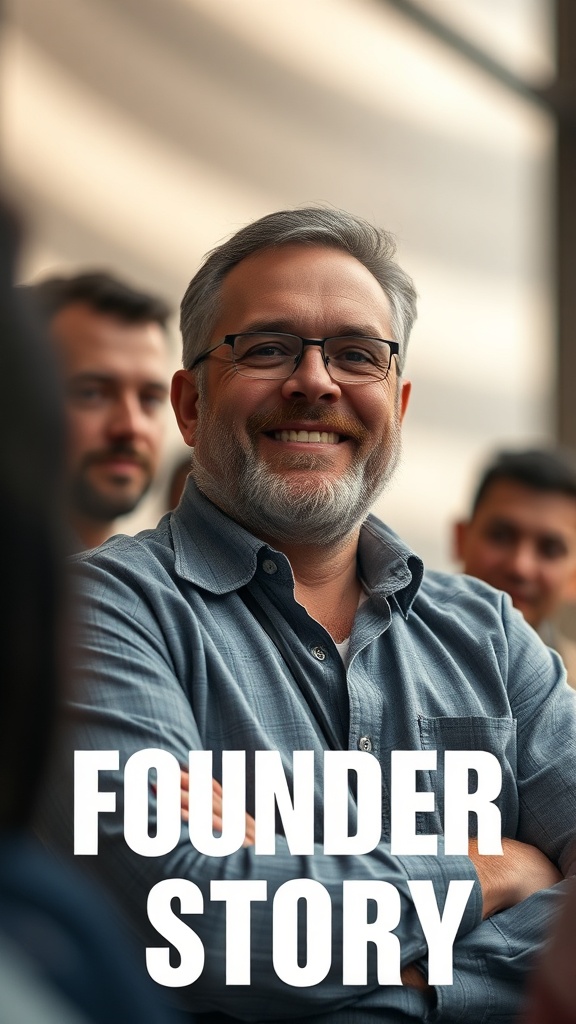
The Founder Story is often the single most compelling marketing and recruiting tool a startup owns. Done well, it turns a personal journey into trust, differentiates a product in crowded markets, and creates emotional resonance that converts visitors into customers, hires, and investors.
Why the Founder Story Matters
People don’t buy features; they buy reasons. A clear, well-told founder story gives context to why the company exists, what problems it solves, and who it serves. It humanizes the brand and provides a memorable narrative thread that can be reused across content, PR, and fundraising materials.
A simple structure to craft your Founder Story
– Origin: Describe the moment that exposed the problem. Be specific—small details make stories believable.
– Struggle: Explain the frustration, failed attempts, or barriers that made the problem urgent.
– Turning point: Share the insight or decision that led to action—this is the story’s emotional core.
– Solution: Introduce how the product or approach solves the problem differently.
– Impact: Provide concrete outcomes, customer anecdotes, or early metrics that prove traction.
– Vision: Close with the future the founder wants to create and invite the audience to join.
Practical tips for authenticity and clarity
– Lead with empathy: Start by describing the user’s pain before shifting to the founder’s perspective. This avoids a self-centered tone and immediately connects with readers.
– Be specific, not generic: Swap vague claims like “we improve productivity” for exact scenarios, e.g., “we cut onboarding time from months to weeks for remote teams.”
– Show, don’t just tell: Use customer quotes, before-and-after examples, and succinct metrics where possible. Real-world proof outperforms lofty missions.
– Avoid the origin myth trap: Too much focus on a lone founder conquering all can feel implausible and alienate team-minded talent. Highlight collaborators and customers who helped shape the product.
– Keep language accessible: Jargon and technical detail belong in product docs, not the emotional arc of a story.
Formats that amplify the Founder Story
– About page: The primary destination—balance brevity and depth with a longer “read more” version for curious visitors.
– Pitch deck: Condense the story into one slide that explains the problem, founder credibility, and mission in three lines.
– Short-form video: Platforms favor authentic, behind-the-scenes clips that show the founder working, meeting customers, or testing prototypes.
– Long-form essay or founder letter: Ideal for deeper context and PR placements; great for email newsletters and LinkedIn posts.
– Podcast interviews: Allow nuance and voice—listeners bond with tone, hesitation, and personality in ways text can’t mimic.
Common pitfalls to avoid
– Over-polishing: A story that sounds scripted loses credibility.
Imperfections often feel more honest.
– Relying on charisma alone: A charismatic founder can draw attention, but without evidence of impact the story fades.
– Using the story as a substitute for strategy: Narratives attract interest, but product-market fit and execution close deals.
A great Founder Story is both an engine and an asset: it powers acquisition, retention, hiring, and fundraising while becoming a core part of brand identity.
Start by mapping the emotional beats, gather one or two compelling customer proofs, and test variations across channels. Small, authentic edits over time will keep the narrative fresh and increasingly effective.