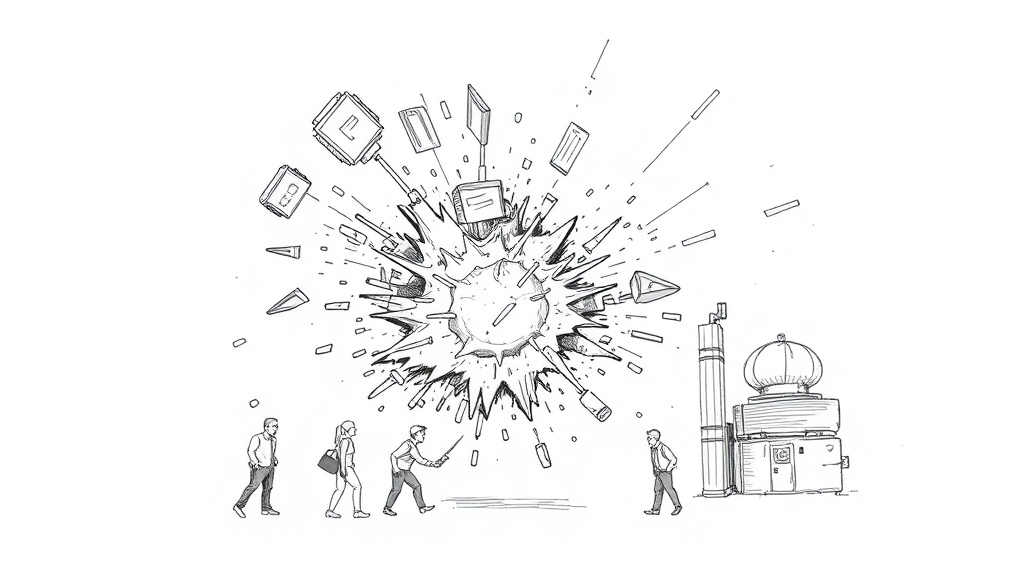
Market disruption arrives quietly at first: a new business model, a platform that connects buyers and sellers more efficiently, a regulatory shift, or a sudden change in consumer preferences. When those weak signals compound, entire industries can be reshaped. Understanding the drivers of disruption and preparing pragmatic responses has become a core capability for resilient organizations.
What drives disruption
– Platformization and network effects: Digital platforms reduce friction between supply and demand, enabling rapid scale and winner-takes-most dynamics. Once network effects kick in, incumbents struggle to compete on reach and convenience alone.
– Business-model innovation: Subscription offerings, usage-based pricing, and direct-to-consumer distribution channels realign value capture and customer relationships, often leaving traditional players behind.
– Regulatory and policy shifts: New privacy rules, sustainability mandates, or trade policies can change cost structures and market access overnight, advantaging firms that adapt quickly.
– Supply-chain resilience: Global shocks and shipping constraints highlight the value of flexible sourcing, nearshoring, and inventory strategies that prioritize continuity.
– Sustainability and circular economy expectations: Consumers and corporate buyers increasingly evaluate products for environmental impact, forcing redesigns in materials, packaging, and lifecycle services.
– Technology-enabled experience: Faster, more personalized customer experiences—delivered across mobile, voice, and integrated services—raise expectations and redefine competitive parity.
Strategic responses that work
1.
Adopt platform thinking: Look beyond products to the ecosystem of users, partners, and developers.
Platforms can amplify reach and create defensible moats through data and community.
2. Experiment with business models: Test subscription, freemium, and bundled pricing in pilot markets. Flexible monetization helps capture diverse customer segments and smooths revenue volatility.
3. Invest in modular systems: A modular tech and operations stack enables faster iteration, easier partnerships, and lower switching costs when strategies evolve.
4.
Make customer experience central: Map end-to-end journeys and remove friction points. Fast response times, consistent omnichannel interactions, and personalization convert curious users into loyal customers.
5. Build scenario-ready supply chains: Diversify suppliers, hold strategic buffer inventories, and use nearshoring where economics permit. Visibility and contingency planning prevent disruptions from becoming crises.
6. Operationalize sustainability: Embed lifecycle thinking into product design, use renewable inputs where feasible, and offer repair or take-back programs to meet rising buyer expectations.
7.
Cultivate a test-and-learn culture: Small bets, rapid feedback loops, and empowered cross-functional teams accelerate learning and reduce the risk of large-scale failures.
8. Engage regulators proactively: Early dialogue with policymakers and participation in industry standards can shape rules and reduce compliance surprises.
Tactics for incumbents and challengers
– Incumbents should leverage scale and relationships while shedding legacy overhead that slows innovation.
Spinning out experimental units, partnering with nimble firms, or launching internal venture arms are effective ways to capture new growth.
– Challengers should focus on niche excellence and rapid customer acquisition. Clear differentiation and relentless operational discipline can turn a narrow lead into broader influence.
Measuring readiness
Track leading indicators such as customer retention for new offers, time-to-market for pilots, supplier concentration ratios, and net promoter score across channels. These metrics reveal whether the organization can convert strategy into sustained advantage.
Staying competitive during disruption demands more than technology or cost-cutting. It requires an integrated approach that blends strategic foresight, operational flexibility, and relentless customer focus. Organizations that treat disruption as an ongoing condition—rather than a one-time event—are the ones that reshape markets and capture the upside when the rules change.