Market disruption is a term that’s been making waves in the business realm as of late.
This concept arises when a new entrant into an existing market significantly alters the way that market operates, often causing established companies to falter or fail. The disruption typically arises due to a novel application of technology, an innovative business model, or a shift in consumer behavior.
Let’s dive deeper into what market disruption is and how it plays out in today’s business landscape.
Market disruption is generally triggered by innovators – fledgling companies that come up with new ways of doing things that challenge the status quo.
These disruptors often start by targeting a small, overlooked segment of the market.
They may offer lower prices, better service, or a product that’s just different enough to stand out.
Gradually, as these disruptors gain a foothold and build their customer base, they start to encroach on larger market segments.
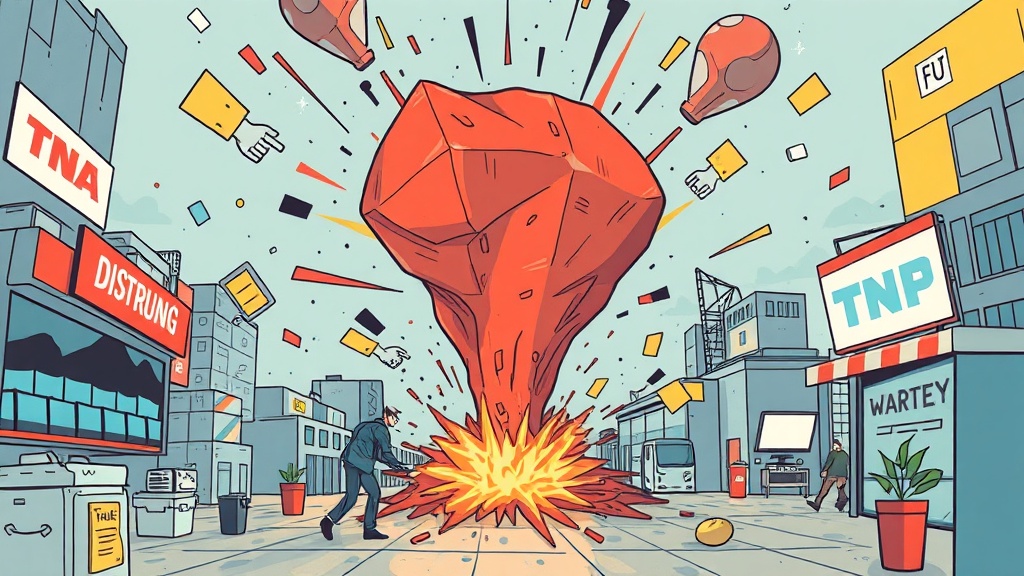
As their influence grows, established companies that fail to adapt quickly enough can find themselves losing ground.
A classic example of market disruption is the rise of e-commerce.
Traditional brick-and-mortar retailers were initially slow to recognize the potential of online selling. However, this digital platform provided a new way for consumers to shop, transforming the retail landscape. The convenience, variety, and 24/7 availability offered by e-commerce platforms appealed to consumers, and gradually, online shopping became the norm. Companies that failed to transition or adapt to this new retail environment faced significant challenges.
Currently, we’re seeing a similar trend in the entertainment industry. Streaming services are disrupting traditional cable and satellite television providers. Consumers today value the flexibility, affordability, and vast content library that streaming services offer. The rise of these platforms is forcing traditional providers to rethink their strategies and adapt to customer demands.
So, what does this mean for businesses? The first lesson is to keep an eye on the horizon for potential disruptions. This means staying up-to-date with emerging technologies, closely following industry trends, and constantly seeking to understand changing consumer behavior.
Secondly, businesses need to be willing to innovate. This could mean developing new products or services, adopting new technologies, or changing the way they do business.
Companies that are resistant to change often find themselves at a disadvantage when disruption occurs.
Finally, businesses need to adopt a customer-centric approach. Disruptions often occur because a new entrant has found a better way to meet customer needs. By focusing on the customer and continually looking for ways to improve the customer experience, businesses can stay ahead of potential disruptors.
Despite its challenges, market disruption also presents opportunities. It can spur innovation, prompt businesses to improve their offerings, and open up new markets. For disruptors, it can be a chance to carve out a niche, challenge established players, and shake up an industry.
In today’s highly competitive and rapidly changing business environment, market disruption is more of a rule rather than an exception. It’s a phenomenon that businesses need to understand and be prepared for.
Those that do will not only survive but thrive amidst the waves of change.