What is a growth mindset and why it matters
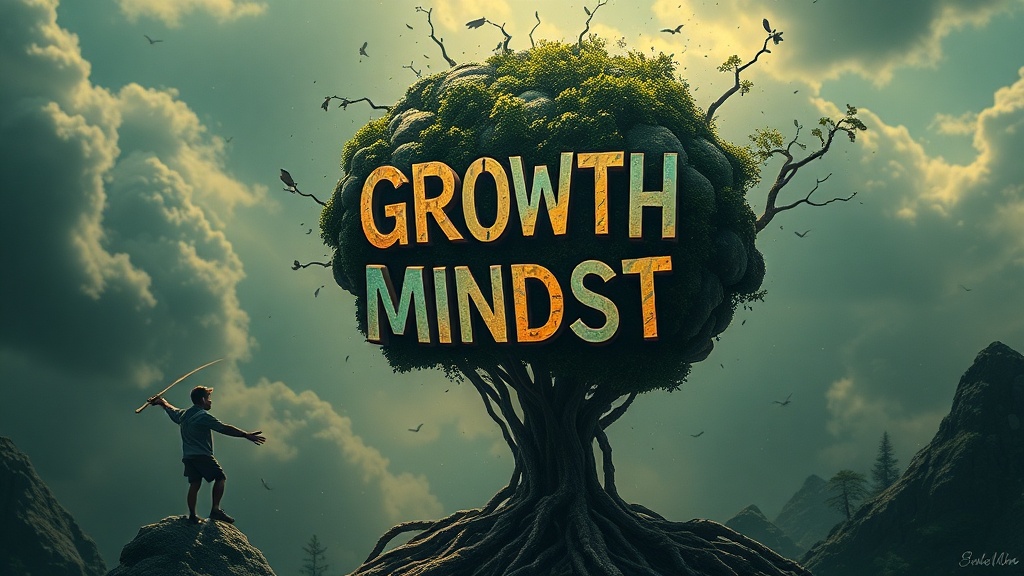
A growth mindset is the belief that abilities and intelligence can be developed through effort, effective strategies, and input from others.
It contrasts with a fixed mindset, which assumes traits are innate and unchangeable.
Adopting a growth mindset encourages resilience, deeper learning, and sustained motivation—qualities that improve performance in school, work, and personal life.
Concrete benefits
– Better learning outcomes: People with a growth mindset tend to engage more deeply with challenging material and persist longer when tasks are difficult.
– Improved emotional resilience: Viewing setbacks as learning opportunities reduces anxiety and prevents discouragement.
– Stronger collaboration: Growth-oriented teams share feedback, experiment, and iterate more freely, fostering innovation.
– Enhanced motivation: Emphasizing progress and mastery over validation keeps long-term goals within reach.
Practical strategies to develop a growth mindset
1. Reframe challenges as experiments
Treat difficult tasks as experiments to be iterated on rather than threats to self-worth. Ask, “What can I test next?” instead of, “Am I good enough?” This shifts attention to learning and away from judgment.
2. Replace praise of traits with praise of process
Instead of saying someone is “smart” or “talented,” acknowledge effort, strategy, and persistence: “You worked through multiple strategies to solve that problem—we learned a lot.” This encourages repeating effective behaviors.
3. Use actionable feedback
Feedback should be specific, task-focused, and forward-looking. Highlight what worked, what didn’t, and give a clear next step. Good feedback unlocks improvement; vague praise stalls it.
4. Set learning goals, not just performance goals
Learning goals (master X skill, master Y technique) promote growth because they emphasize competence-building.
Performance goals (get an A, beat a competitor) can be motivating but may reduce risk-taking and deeper learning.
5.
Practice deliberate, focused effort
Deliberate practice targets weaknesses with focused, repetitive work plus feedback. Break skills into sub-skills, practice them deliberately, then integrate into larger tasks.
6. Normalize “not yet”
Language matters. Saying “not yet” or “this is a step toward mastery” signals that ability grows with time and practice, reducing shame and encouraging persistence.
Avoid common pitfalls
– Don’t confuse praising effort alone with cultivating a growth mindset. Effort without strategy or feedback is inefficient.
– Avoid fixed-mindset labels that stick. Statements like “You’re just not a math person” create limiting beliefs that are hard to undo.
– Recognize that mindset shifts take time.
Small, consistent practices matter more than quick motivational speeches.
Applying growth mindset at work and at home
Leaders can model growth mindset by admitting mistakes, sharing learning journeys, and rewarding experimentation—especially when it leads to useful insights even if the outcome wasn’t perfect. Parents and educators can focus on process-based praise, encourage curiosity, and provide opportunities for struggling productively rather than rescuing children from failure.
Quick starter plan
– Choose one skill to improve and define a clear, small learning goal.
– Identify one deliberate practice activity and a feedback source.
– Track progress weekly and celebrate incremental wins with process-focused praise.
Adopting a growth mindset is a practical, evidence-backed way to unlock potential. Begin small, be consistent, and treat each setback as data that guides the next step in learning.